When most people think about extractions, they tend to picture an urgent moment. Pain shows up, something feels wrong, and the assumption follows quickly: this needs to happen right now. Extractions often carry a sense of finality, as if the decision appears suddenly and leaves no room for discussion or planning.
That experience does happen, but it is not the only way extractions enter the picture. Some do arrive unexpectedly, driven by pain or infection that can no longer wait. Others unfold more quietly. We identify them during routine visits, long before they turn into a problem that demands immediate action. The timing may look different, but the goal remains the same: protecting your oral health in the most thoughtful way possible.
When Extractions Cannot Be Delayed
Some extractions cannot wait because the tooth poses a direct risk to your health or is actively contributing to escalating discomfort. When pain intensifies instead of improving, it often signals deep decay, infection, or nerve damage that no longer responds to temporary relief. In these cases, the tooth becomes a source of ongoing inflammation rather than stabilizing on its own. Prompt removal helps stop the problem at its source instead of allowing it to progress.
Active infection also changes the timeline for extractions. When bacteria collect beneath a tooth or in the surrounding tissue, the infection can spread outside the immediate area. Swelling, pressure, or a persistent bad taste may point to an abscess that requires immediate attention. Addressing the tooth quickly reduces the risk of the infection moving into the jaw, nearby structures, or the bloodstream.
Structural damage creates another situation where delaying care increases risk. A tooth that has fractured, loosened, or broken below the surface often cannot heal or stabilize without intervention. When damage exposes internal tissue, bacteria gain a direct pathway into areas that were previously protected.
When extractions are delayed under these conditions, symptoms often become harder to manage. Pain can increase, infections can spread, and nearby teeth or bone may begin to suffer as well. Acting quickly allows our team to address the problem directly, limit complications, and restore comfort and oral health as efficiently as possible.
How We Identify the Need for Planned Extractions
Planned extractions enter the conversation when a tooth shows clear signs that it will not remain stable or functional over time. The tooth may still feel manageable day to day, but its condition points toward ongoing deterioration rather than recovery. In these situations, we recommend removal before the tooth begins to disrupt surrounding structures or complicate future care.
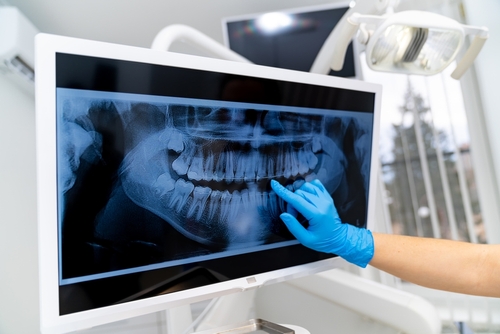
We identify the need for planned extractions through a combination of clinical evaluation and diagnostic imaging. Extensive decay, advanced periodontal disease, or structural breakdown can leave a tooth unable to support restorative treatment in a predictable way. When repeated repairs are unlikely to hold, extraction becomes a more responsible option than continued intervention.
Planned extractions often shape the direction of restorative care. Some teeth interfere with the design, placement, or long-term success of prosthetic solutions such as bridges, dentures, or implant-supported restorations. Removing these teeth intentionally and at the right time allows the rest of the treatment plan to move forward with greater stability and fewer compromises.
To determine whether a tooth is a candidate for planned extraction, we review imaging, oral health history, and the broader treatment goals. Timing reflects more than the tooth itself; it reflects how that tooth fits into your overall oral health and the care you want to receive moving forward.
Tooth Replacement With Dental Implants
Not all extractions follow the same path, and not all require the same urgency. The conversation that often follows, however, tends to look familiar. Once a tooth is removed, attention shifts to healing, restoring function, and protecting the surrounding bone. At that point, we guide patients through tooth replacement options with an eye toward long-term stability rather than short-term fixes.
Dental implants frequently rise to the top of that discussion. We place these small titanium posts directly into the jawbone, where they serve as a foundation for a future restoration. Instead of resting on the gums or relying on neighboring teeth for support, the implant becomes anchored within the bone itself.
Over time, the surrounding bone bonds with the implant through a process called osseointegration. This response matters because it reflects how the body accepts the implant as part of its structure. Once that connection forms, the implant functions much like a natural tooth root. It supports chewing forces, helps maintain bone integrity, and offers a level of stability that traditional tooth replacement methods can’t.
Talk With Our Team About Extractions and Treatment Options
If you are dealing with tooth pain, have concerns about a problem tooth, or have been told an extraction may be necessary, we can provide clarity. We take the time to assess your situation, explain why an extraction may be urgent or planned, and walk you through what comes next. Contact our office today to schedule a consultation. We can evaluate your needs, answer your questions, and help you move forward with a plan that’s right for you.