Permanent dentures generally refer to a fixed set of replacement teeth supported by dental implants. The word “permanent” mainly describes how the teeth stay in place. You do not remove them at night or take them out for routine cleaning. You brush and clean around the restoration while it remains in your mouth, and Dr. Williams or Dr. Byrd can remove it when professional maintenance or repair is needed. Permanent dentures still require ongoing care, so permanence does not mean the restoration is maintenance-free. The implants, the gums, and replacement teeth all need attention over time. So, if permanence is one of the reasons this treatment appeals to you, what happens after placement is worth understanding too.
How “Permanent” Are Permanent Dentures?
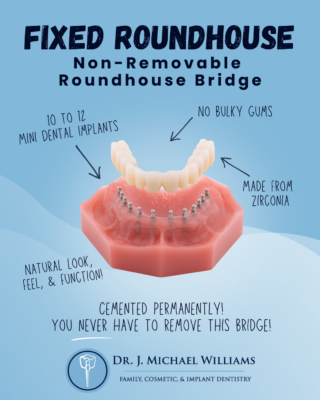
Permanent dentures are meant to provide long-term tooth replacement, but their lifespan depends on which part of the treatment you are talking about. The dental implants sit in the jaw and provide the foundation. With healthy bone, good oral hygiene, and regular dental care, implants can often remain stable for decades and, in some cases, for a lifetime.
The full-arch restoration attached to those implants has a different job. It handles the daily pressure of biting and chewing, so the replacement teeth and restorative materials are more likely to show wear over time. A full-arch bridge may eventually need repair, refurbishment, or replacement even while the dental implants underneath remain healthy.
So, permanent dentures are not temporary teeth that you expect to replace every few years. They are meant to stay securely supported in the mouth for the long term. Still, the implants may outlast the restoration they support, which is why the lifespan of permanent dentures cannot be reduced to one number.
A repair or replacement of the prosthetic teeth also does not automatically mean anything has failed. The foundation can remain stable, while the visible restoration above it may need attention after years of everyday use.
How To Take Care of Your Permanent Dentures
Permanent dentures stay in your mouth, but they still need daily cleaning and routine professional care. Dental implants cannot develop cavities, but plaque and bacteria can collect around the gums and beneath the restoration. Keeping these areas clean helps protect the tissues and bone that support your implants.
At home, you brush your permanent dentures and along the gumline with a soft toothbrush and nonabrasive toothpaste. Cleaning underneath the restoration takes a little more attention because food and plaque can collect in the space between the replacement teeth and your gums. We may recommend a water flosser, floss threader, implant-specific floss, or a small interdental brush to reach these areas.
Professional maintenance takes care of what you cannot easily assess at home. During routine visits, we can examine your gums, dental implants, bite, and full-arch restoration. We also look for inflammation or changes in the tissues and bone around the implants, along with wear, chips, cracks, or changes in how your replacement teeth fit together. Using periodic X-rays, we can monitor the bone supporting your implants.
Between visits, pay attention to changes. Bleeding or swollen gums around your implants, persistent tenderness, an unusual taste or drainage, difficulty cleaning an area, movement, or a new change in your bite are all reasons to contact our office. Permanent dentures are meant to become part of your everyday life, and caring for them helps keep the foundation underneath them healthy too.
Explore Your Implant Denture Options in Dunn, NC
Permanent dentures can give your replacement teeth a stable foundation. Regular care helps protect the implants and restoration over time. Knowing how the teeth are supported, how you will clean them, and what maintenance may involve can help you decide whether a fixed full-arch restoration makes sense for you.
At J. Michael Williams, can evaluate your oral health and explain the implant-supported denture options available to you. Contact our office to book a free implant consultation today!