Dental implant treatment takes time. Even when the procedure is relatively quick, you still need to plan for dental implant recovery afterward. Every dental implant requires surgery, which means giving your mouth time to heal before treatment is truly behind you. But “dental implant surgery” can describe very different procedures. Replacing one tooth may involve a different amount of treatment than replacing several, and a conventional implant may require a different approach than a mini implant. At J. Michael Williams, DDS, in Dunn, NC, we offer both. How your implant is placed, what other treatment you need, and the type of implant you receive all affect your recovery.
What Happens During Dental Implant Recovery?
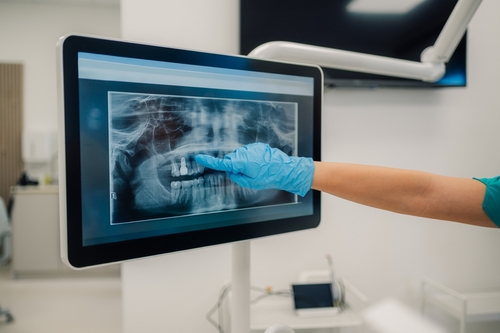
Dental implant recovery can sound confusing when one source says a few weeks while another says several months. Both timeframes can apply because different tissues are healing at the same time.
The tenderness, swelling, bruising, and minor bleeding associated with implant placement come from the surgical procedure. As the gum tissue closes and the surgical site recovers, these symptoms should gradually improve.
At the same time, a slower process occurs around the implant. Dental implants depend on osseointegration, the biological process in which living bone heals and remodels around the implant surface. Over the following months, that developing bone-to-implant connection creates the support the implant needs to withstand pressure from a crown, bridge, or denture. We like to remind our patients that the gums can look healed, and the area can feel normal while this process is still underway.
“Feeling better” can tell you your mouth is recovering from the procedure, but it cannot tell you how much the implant has bonded with your jawbone. In some cases, an implant can be stable enough to support a replacement tooth before that bond has fully developed. Dr. Williams and Dr. Byrd assess the implant’s stability, the surrounding bone, and the type of replacement tooth to determine when it is ready to use.
Does Implant Type Change the Healing Process?
Dental implant surgery is a broad term. The procedure can look quite different depending on the type of implant we place. Implant size, design, and placement can all affect what you need to recover from afterward.
Conventional implants are typically around 5 millimeters wide and have multiple components. Because of their larger size, we may need to make an incision in your gums to access the jawbone during placement. If you don’t have enough bone to support an implant that size, you may also need bone grafting. Once the implant has bonded with your jawbone, we attach an abutment that connects the implant to your new tooth. Depending on your treatment plan, placing the abutment may involve another small procedure before we attach the final restoration.
Mini dental implants measure less than 3 millimeters in diameter, and their narrow size changes how we can place them. We can often insert the implant through a small opening in the gums, which avoids the larger incision commonly needed for a conventional implant. The implant and the connection for your replacement tooth are made as one piece, so there is no separate abutment to place. With a smaller opening and fewer surgical steps, the procedure involves less tissue and recovery is often faster. If the implant is stable at placement, we may also be able to attach a crown, bridge, or denture during the same visit.
What Can Affect Dental Implant Recovery?
Your recovery depends partly on how much treatment you need. The number and location of your implants, extractions, and procedures such as bone grafting can all affect how much healing your mouth has to do. Your general health and individual healing response also influence recovery.
Smoking and vaping can interfere with healing and increase the risk of implant complications. Following our instructions for eating, cleaning the surgical area, and caring for your mouth helps protect the site during recovery.
Some soreness, swelling, bruising, and minor bleeding are normal after implant placement. If pain or swelling increases, bleeding doesn’t stop, or a new problem develops, call our office. We reserve time in our schedule for dental emergencies so we can evaluate urgent concerns as quickly as possible.
Book a Free Implant Consultation To Learn More!
Hearing that dental implants can take several months to heal may make treatment sound like several months of recovery. Fortunately, those are two very different experiences. Much of that time is spent letting the implant bond with your jawbone while you go about your daily life.
The part we can better define is the procedure you will need to reach that point. At J. Michael Williams, DDS, we can determine whether you need a conventional or mini implant, how much surgery placement may involve, and whether an extraction or bone graft belongs in your treatment plan. Book a free consultation to learn what dental implant treatment and recovery could involve for you.