Planning dental implants in the upper back jaw sometimes includes a sinus lift. That connection may not feel obvious at first. A dental implant relies on the jawbone for support, so the amount of bone available directly shapes what comes next. In this part of the upper jaw, the sinus sits just above where implants are placed. After tooth loss, the space can shift. Bone can become thinner, and the sinus can move closer to the area where an implant needs to anchor. When that space is limited, we create it. A sinus lift provides the support needed for an implant to be placed and remain stable.
What Is a Sinus Lift?
A sinus lift addresses a structural limitation in the upper back jaw. In this area, your molars sit directly beneath the maxillary sinus, an air-filled space inside the cheekbone. When a tooth is lost, the bone that once supported it no longer receives stimulation. The body begins to resorb that bone. At the same time, the sinus can expand downward. As those two changes meet, the available bone height narrows. A dental implant requires a certain amount of bone to anchor securely, so when that height is no longer there, we rebuild it.
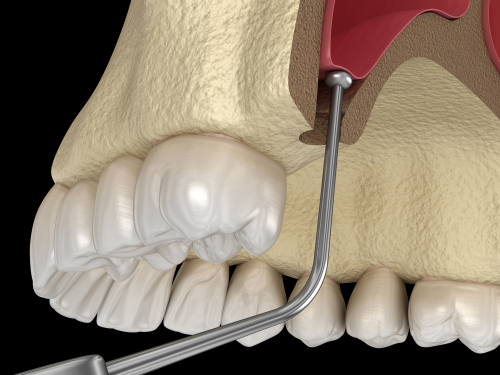
We do that by creating space where the bone used to be. During a sinus lift, we make a small opening in the gum and jawbone near the back teeth. From there, we carefully elevate the sinus membrane. That membrane lines the sinus cavity, and lifting it upward creates a new compartment between the sinus floor and the jaw. We fill that space with bone graft material. Over time, your body incorporates that graft, increasing both the height and density of the bone in that region.
Direct and Indirect Sinus Lifts
The technique we use depends on how much bone remains. When bone loss is more advanced, we perform a direct sinus lift. We create a small access point in the outer wall of the sinus, lift the membrane, and place enough graft material to rebuild the missing height.
When more bone is already present, we use an indirect sinus lift. We access the sinus through the implant site, raise the sinus floor, and often place the implant during the same treatment.
The purpose stays consistent across both methods. We restore the structure that supports an implant so it can integrate with the bone and function under normal biting forces. Without that foundation, an implant cannot remain stable. A sinus lift provides that foundation by rebuilding the space where the implant needs to anchor.
Can I Avoid a Sinus Lift With Mini Dental Implants?
In many cases, you can avoid a full sinus lift by using mini dental implants, though the outcome depends on your anatomy. The amount of available bone in the upper back jaw and the position of the sinus determine what is possible.
Mini dental implants measure less than 3 millimeters in diameter, allowing us to work in areas with reduced bone volume. Their smaller size changes how we approach the space beneath the sinus. When a traditional implant would require additional height, a mini implant can often fit within the existing bone. As a result, we can sometimes move forward without lifting the sinus or placing a larger bone graft.
Some situations require additional support. Severe bone loss or a sinus that sits very close to the ridge can still limit placement. In those cases, we may use a more conservative method, such as an indirect sinus lift, to create the necessary space while keeping the procedure controlled.
During your free implant consultation, we measure your bone and place the implant so it stays stable during everyday use, without adding unnecessary steps.
Take a Closer Look at Your Implant Options
The space beneath your sinus does not automatically limit your options. With the right approach, we can often work within the bone you have or create the support needed for a stable implant.
If you have been told you may need a sinus lift, or you are unsure what your next step looks like, we can give you a clear answer. Schedule your free implant consultation, and we will plan your treatment around what works best for you.