

Many people can get used to the way an upper denture looks. The harder part is getting used to everything else. Food tastes different. Certain words are harder to pronounce. The plate across the roof of your mouth can feel bulky or trigger your gag reflex. Over time, those frustrations can start to feel like a normal part of wearing an upper denture. But they may have more to do with its design than you realize. At J. Michael Williams, DDS, we use dental implants to support palateless dentures. By using implants to hold the restoration securely in place, the upper denture no longer needs a broad acrylic plate to create suction across the roof of your mouth. We eliminate the plate and change the way the denture fits inside your mouth. What’s more, it may even change parts of your daily experience that you had stopped expecting to improve.
How Are Palateless Dentures Different?
Most upper dentures rely on suction to stay in place. To create that suction, the denture extends across the roof of your mouth. The acrylic plate forms a seal against the gums and helps keep the denture from dropping or shifting.
Lower dentures already have an open, horseshoe-shaped design that leaves room for your tongue. It does not cover a broad surface; it rests along the ridge of the lower jaw for support.
An upper denture faces a unique challenge. Gravity works against it, and the greater surface area of the upper jaw makes full-palate coverage necessary to create the suction that helps hold a traditional denture in place. Without that acrylic palate, a conventional upper denture would have very little stability.
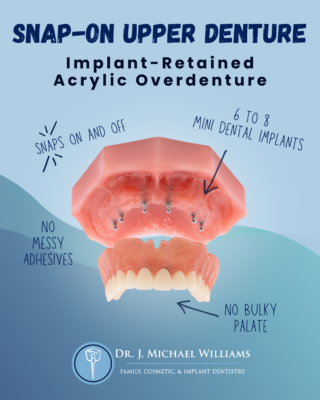
A palateless denture replaces suction with implant support. Instead of relying on the roof of your mouth for retention, the denture attaches to several mini dental implants or traditional dental implants that are placed in the upper jaw. During healing, the surrounding bone bonds to the surface of the implants, creating a stable foundation for the restoration. Once connected, the denture stays securely in place without covering your palate.
What Changes With Palateless Dentures?
Can They Improve Taste?
While most taste buds are found on the tongue, the soft palate also contains taste receptors. These receptors help your brain interpret flavor. Temperature, texture, and aroma all work together with taste to create the experience of eating.
A traditional upper denture covers the roof of the mouth with an acrylic plate. As you eat, food and dissolved flavor molecules come into contact with that acrylic instead of the tissues underneath. At the same time, the denture creates a barrier between the roof of your mouth and the warm aromas that naturally travel toward your nose while you chew. Those changes can make certain foods seem less flavorful, even though your tongue is still detecting the basic tastes.
Palateless dentures leave the roof of the mouth uncovered, allowing food, temperature, and aroma to reach those tissues more naturally.
People who notice the biggest difference often describe richer flavors in foods and drinks that depend heavily on aroma and temperature, such as hot coffee, wine, warm soups, or spicy meals. Leaving the palate uncovered allows more of those sensations to come through, which can make meals feel fuller and more enjoyable.
Can They Reduce the Gag Reflex?
Your gag reflex is a protective response that helps prevent choking. It can be triggered when sensitive areas near the back of the mouth are touched, including the soft palate. For some people, the coverage of a conventional upper denture can create pressure in an already highly sensitive area. The brain may interpret the denture as something interfering with swallowing, which can trigger gagging or keep the reflex unusually reactive.
Palateless dentures remove much of that stimulation. Dental implants hold the restoration in place, so it does not need a broad acrylic plate across the roof of the mouth. Leaving the palate open reduces contact with the areas most likely to trigger the reflex.
Not everyone with an upper denture experiences gagging, and removing the palate does not guarantee that the reflex will disappear. People with a strong or persistent gag reflex may notice the greatest improvement because one of their main triggers is no longer present.
Can They Make Eating Easier?
Since a palateless denture is anchored to dental implants, it is far less likely to rock or shift when you bite into firmer foods.
Once the implants have healed and you are cleared to return to a broader diet, foods such as sandwiches, apples, steak, and crusty bread may be easier to manage. You can focus more on chewing and less on whether your upper denture will move halfway through the meal.
It’s Time To Rethink What Living With a Denture Could Feel Like
You may have grown used to avoiding certain foods, tasting less of what you eat, or feeling the roof of your mouth covered throughout the day. Familiar does not always mean comfortable.
Dental implants can support an upper denture without the broad acrylic plate across your palate. With a more secure fit and less coverage inside your mouth, eating, tasting food, and wearing your denture throughout the day may feel noticeably different. Book a free implant consultation at J. Michael Williams, DDS, to explore your options.