
Partial dentures replace missing teeth while preserving the natural teeth you still have. They’re a familiar replacement option, but patients often have questions as they think through the details of wearing them. Will the metal clasps show when they smile? How long will eating and speaking feel different? Do partial dentures stay in at night? J. Michael Williams, DDS in Dunn, NC, we encourage patients to ask these questions before settling on a restoration. After all, replacing missing teeth is one thing. Living with your replacement teeth every day is another.
Why Do Partial Dentures Have Metal Clasps?
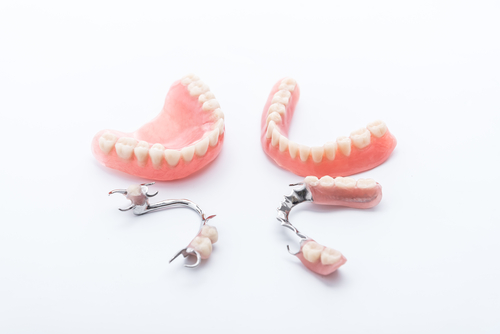
Many removable partial dentures use metal clasps to hold the appliance in place. The clasps fit around selected natural teeth, helping keep the denture stable while you speak and chew. Other components of the denture help distribute pressure across the supporting teeth and oral tissues.
Clasp placement depends on the location of your missing teeth and the denture design. Some clasps are visible when you smile, particularly when they attach to teeth near the front of your mouth. Other designs use tooth-colored materials or specialized attachments to make the hardware less noticeable.
A properly fitted partial denture should stay secure without placing excessive stress on the teeth supporting it. Regular dental visits help us monitor the fit and check the health of these teeth.
How Long Does It Take to Adjust to Partial Dentures?
Most patients need a few weeks to adjust to partial dentures, although the adjustment period varies.
Your tongue and cheeks need time to adapt to the appliance. Certain words may sound different at first, and chewing may require extra attention. Starting with softer foods, taking smaller bites, and chewing on both sides of your mouth may help during the adjustment period.
Some tenderness is possible when you begin wearing a new partial denture. Persistent soreness, painful pressure points, or an appliance that shifts during meals deserves attention. We may need to adjust the fit to relieve irritation and improve stability.
Can You Sleep With Partial Dentures?
We generally recommend removing partial dentures before bed. Wearing them continuously keeps the appliance in contact with your gums and supporting tissues for extended periods, potentially contributing to irritation and inflammation.
Nighttime removal also gives you a chance to clean the denture thoroughly. Food particles and plaque accumulate around clasps and other components, so regular cleaning helps protect your remaining natural teeth and gums.
Brush your natural teeth, clean the partial denture with an appropriate denture cleanser, and store it safely between uses. We will explain any specific recommendations based on your restoration and oral health.
What If You Prefer a Fixed Dental Bridge?
Questions about partial dentures often focus on the same feature: the appliance is removable. Metal clasps help retain it, but it takes adjustment to wear, and nightly removal is generally part of its care.
An implant-supported bridge is one other way to replace several missing teeth. Dental implants anchor the bridge directly in the jawbone, eliminating the need for clasps around neighboring teeth. The restoration remains in place while you eat, speak, and sleep.
You’ll still need to brush regularly and clean around and beneath the bridge to maintain healthy gums and implants. However, you won’t need to remove the restoration each night or soak it in a denture solution.
Implant bridges aren’t appropriate for every situation. Our team will evaluate the location of your missing teeth, the condition of your jawbone, and your overall oral health before recommending treatment.
Explore Your Tooth Replacement Options in Dunn, NC
Partial dentures have helped many patients restore their ability to chew and smile. Still, the daily requirements of wearing a removable appliance may influence which tooth replacement you prefer. An implant bridge offers fixed support without relying on clasps around your remaining teeth.
At our Dunn, NC, office, our team will assess your oral health, explain your replacement options, and help you determine which restoration suits your needs. Schedule a consultation to discuss partial dentures, implant bridges, and your treatment options.